Learning how to count macros for weight loss has become a popular strategy for those looking to lose weight, build muscle, or simply improve their overall health. While generic calorie counting focuses solely on the energy you consume, macro counting ensures your total calorie intake is balanced across the three main nutrients that fuel your body: protein, carbohydrates, and fats. Meal Planner Pro makes macro tracking effortless with automatic calculations, customizable meal plans, and a clean interface designed specifically for people learning how to count macros for weight loss.
What Are Macronutrients?
"Macros" is short for macronutrients, which are the primary nutrients the body needs in large quantities to function.
- Protein: Essential for building and repairing cells, including muscles and bones. It also increases satiety and has a higher thermic effect than other macros, meaning your body burns more energy digesting it.
- Carbohydrates: These are the main source of energy for your brain and muscles.
- Fats: Fats help regulate body temperature, produce hormones, and protect organs. They are the most energy-dense macro, containing 9 calories per gram compared to 4 calories per gram for protein and carbs.
The Foundation: Calorie Deficit
Before you dive into the specifics of how to count macros for weight loss, it is vital to understand that weight loss is primarily driven by a calorie deficit. A calorie deficit occurs when you burn more energy than you consume, forcing your body to use its fat stores for fuel. Research indicates that you can lose weight on various macronutrient ratios as long as you remain in a consistent deficit.
Step-by-Step Guide: How to Count Macros for Weight Loss
1. Calculate Your Caloric Needs
The first step is determining your Total Daily Energy Expenditure (TDEE), which is the total number of calories your body burns in a day based on your age, weight, height, and activity level. This is often calculated starting with your Basal Metabolic Rate (BMR)—the calories your body burns at rest. Meal Planner Pro offers a built-in TDEE and macro calculator that does this automatically.
2. Set a Safe Deficit
To lose weight healthily, you should aim to consume fewer calories than your TDEE. Common recommendations include subtracting 300–500 calories from your maintenance level, or aiming for a reduction of approximately 600 calories per day.
3. Determine Your Macro Ratios
Once you have your daily calorie target, you can decide how to distribute those calories. The 2020-2025 Dietary Guidelines for Americans suggest the following ranges for adults:
- Carbohydrates: 45% to 65% of total calories.
- Protein: 10% to 35% of total calories.
- Fats: 20% to 35% of total calories.
For weight loss specifically, some research suggests that a higher protein intake—between 1.2 to 2 grams per kilogram of body weight—can be more beneficial for retaining muscle mass and promoting fullness.
4. Track Your Intake
When learning how to count macros for weight loss, practical tracking is essential.
- Read Labels: Look at the "kcal" and the grams of protein, carbs, and fat per serving.
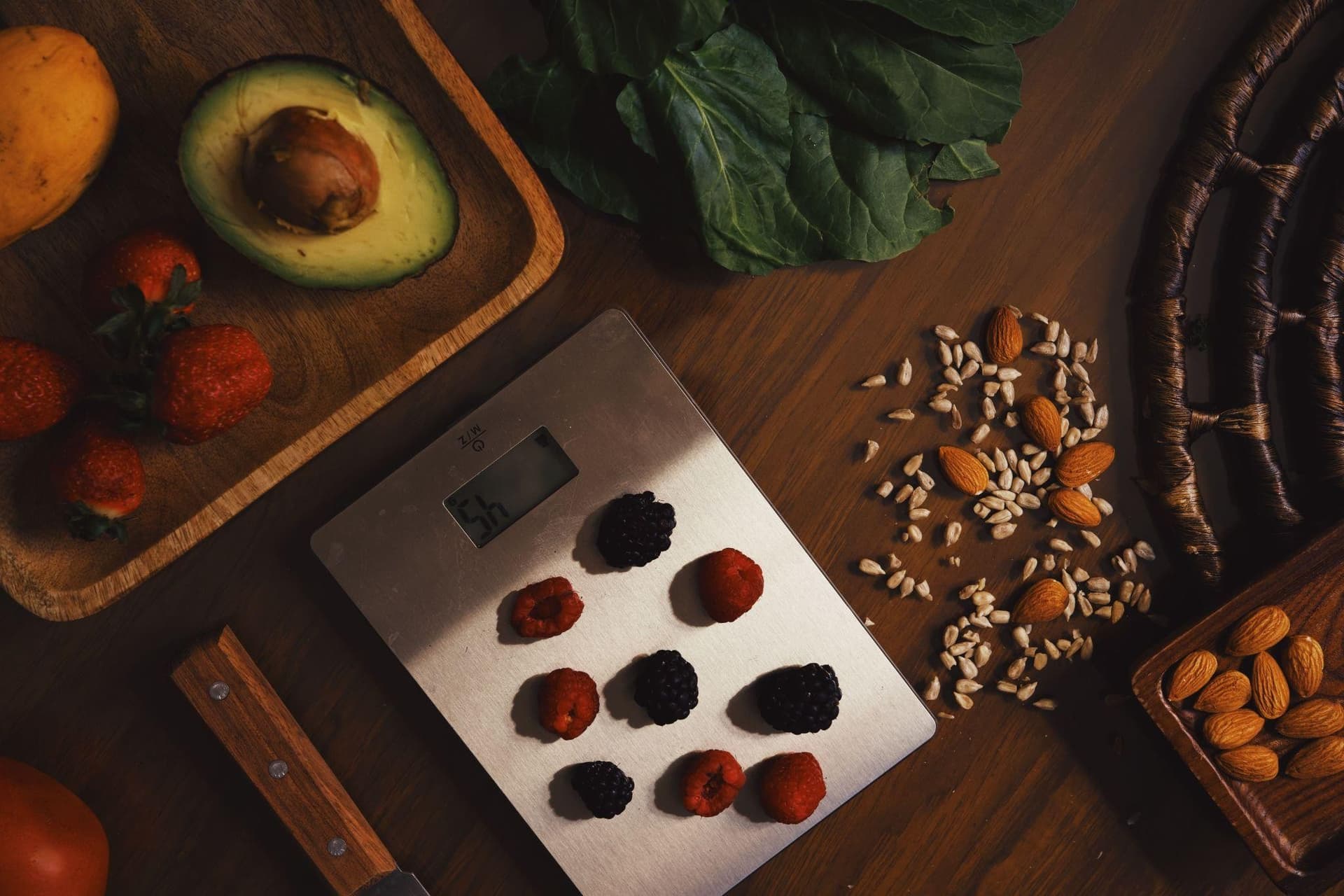
- Weigh Your Food: Using a digital scale to weigh portions before cooking is more accurate than estimating, as manufacturer portion sizes may differ from what you actually eat.
- Use an App: Many people find success recording their intake in a spreadsheet or a dedicated weight loss app to visualize their daily progress.
Worked Example: Calculating Macros in 4 Steps
Here is the same process with the formulas filled in.
Step 1: Find Your BMR and TDEE
Most calculators use the Mifflin-St Jeor equation, which accounts for your age, sex, height and current weight. If you are lean and know your body fat percentage, the Katch-McArdle formula may be more accurate because it uses lean body mass. Multiply your BMR by an activity factor to get your TDEE:
- Sedentary: BMR x 1.2
- Lightly Active: BMR x 1.375
- Moderately Active: BMR x 1.550
- Very Active: BMR x 1.725
Step 2: Set a Sustainable Target
A reduction of 10% to 20% below your TDEE is a common recommendation for steady weight loss. The popular rule that cutting 3,500 calories a week loses one pound of fat is only a rough guide, because your metabolism and body composition change as you lose weight.
Step 3: Choose a Ratio
If your focus is weight loss and keeping muscle, some experts recommend the higher end of the protein range. A common split is 40/40/20:
- 40% Carbohydrates: Fuel for workouts and brain function.
- 40% Protein: Building and repairing muscle, and staying full.
- 20% Fats: Hormone regulation and vitamin absorption.
Step 4: Do the Macro Math
Convert each percentage into grams, using 4 calories per gram of protein or carbohydrate and 9 calories per gram of fat. For 2,000 calories per day on a 40/40/20 split:
- Protein: 40% of 2,000 = 800 calories. 800 / 4 = 200g of protein.
- Carbs: 40% of 2,000 = 800 calories. 800 / 4 = 200g of carbs.
- Fats: 20% of 2,000 = 400 calories. 400 / 9 = ~44g of fat.
Prioritizing Food Quality
While the numbers are important, the quality of your calories matters for long-term health and satiety. For example, choosing fiber-rich complex carbohydrates like whole grains, fruits, and vegetables will keep you full longer than refined carbs like sugary drinks or white bread. Similarly, prioritize "healthy" fats—such as those found in olive oil, nuts, and fatty fish—over trans fats and excessive saturated fats.
Is Macro Counting Right for You?
Counting macros can be a powerful tool because it provides a clear picture of your eating habits and allows for adjustments based on your specific fitness goals. However, it requires time to read labels and track intake. Some people find the data empowering, while others may find the process too restrictive or time-consuming. If you have a history of eating disorders or a medical condition, it is best to consult a healthcare professional before starting a new meal plan.
General information, not medical advice. Talk to your doctor or a registered dietitian before making big changes to your diet, especially if you have a health condition.
Our editorial policy